Cluster Pays vs Paylines: What’s the Difference? The HypeRoll Breakdown
Not all slot wins work the same way. Cluster pays and paylines are two fundamentally different win mechanics, and confusing them leads to misreading volatility, bonus features, and even your own results. This guide breaks down how each system works, clears up the most common misconceptions, and gives you a practical framework for choosing the right type of game for your casino strategy.
Step-by-Step Guide
Understanding how wins are calculated starts with knowing exactly what each mechanic does. Follow these steps to assess any slot before you play.
- Open the paytable and look for the words “paylines,” “ways to win,” or “cluster.” This single label tells you the win engine.
- For payline slots, count the active lines and note whether they are fixed or adjustable. Your bet per line directly affects the minimum and maximum stake.
- For cluster pays slots, check the minimum cluster size — usually five or more matching symbols touching horizontally or vertically. No lines, no fixed paths.
- Read the volatility rating or review the hit frequency estimate. Cluster games tend to have lower hit frequency on large clusters but can deliver cascading wins within a single spin.
- Run a short free-play session if available. Track how often you land mid-size wins versus long dry spells. This gives you a personal baseline before committing real money.
At HypeRoll, the game filter lets you sort by mechanic type, which makes this initial research step significantly faster than browsing blind.
Common Misconceptions
Several persistent myths around these mechanics can distort how players approach their sessions. Sorting fact from fiction is a core part of any sound casino strategy.
- Misconception: cluster pays slots pay more overall. RTP (return to player) is set by the game math, not the win mechanic. A cluster game and a payline game can share an identical RTP.
- Misconception: more paylines always means more frequent wins. Fixed 243-ways or 1024-ways games use every adjacent position as a win path, which is distinct from having 243 discrete lines.
- Misconception: cluster pays are harder to trigger. Many cluster games use cascading or tumble features that remove winning symbols and refill the grid, creating multiple win events per spin — something traditional paylines rarely replicate.
- Misconception: payline slots are outdated. Modern video slots with structured paylines still dominate the market in terms of title count and often provide more predictable session math.
The win mechanic does not determine the game’s generosity — the RTP and variance do. Choosing a mechanic is about gameplay feel and volatility profile, not chasing a theoretical edge.
Core Concepts
Before comparing the two systems side by side, it helps to anchor both in precise definitions that the rest of your casino strategy can build on.
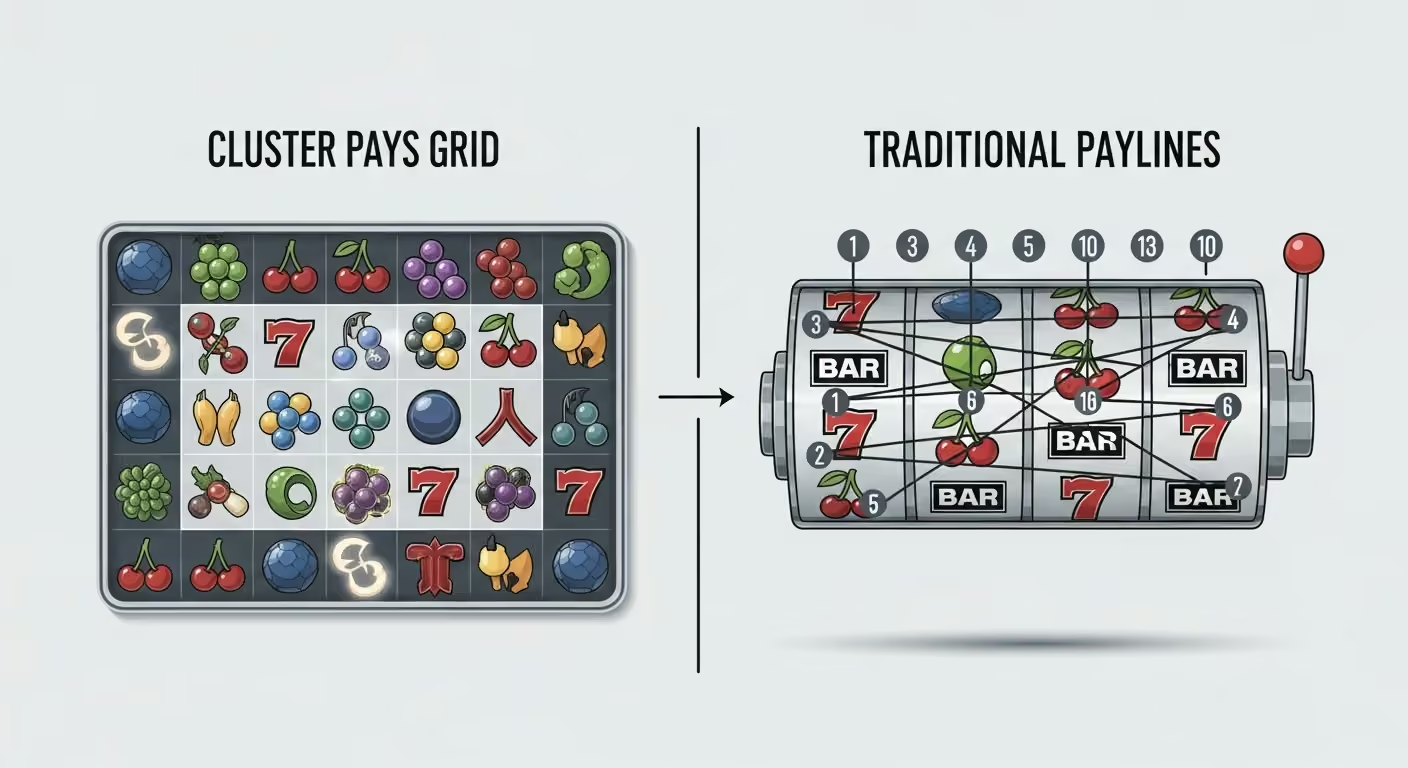
A payline is a fixed path across the reels — typically left to right — along which matching symbols must land for a win to register. Classic slots used a single central line; modern games commonly run 10, 20, 25, or 50 lines, and some use the all-ways format that counts every adjacent combination rather than discrete paths.
Cluster pays removes directional paths entirely. Instead, symbols anywhere on the grid form a winning group when a set number of identical symbols are connected — touching edge to edge. The mechanic is common in grid-format slots and is frequently paired with cascading reels, where winning symbols disappear and new ones fall in, potentially triggering consecutive wins from a single paid spin.
| Option | Best For | Drawbacks |
|---|---|---|
| Cluster pays slots | Players who prefer chain-reaction wins and grid-based gameplay with higher peak potential | Can produce long losing streaks; cluster size threshold can make small wins rare |
| Payline slots | Players who want predictable win structures, adjustable stakes, and clear visual feedback on each spin | Win potential per spin is often capped; fewer chain mechanics mean fewer big swing moments |
Strategies to Avoid
Certain approaches get recycled in slot communities but do not hold up against how these mechanics actually work. Applying them as part of a casino strategy will cost sessions without providing any structural benefit.
- Betting max lines to “force” cluster wins. Cluster pays games have no lines to activate. Bet size scales the prize value but does not influence where symbols land or how clusters form.
- Switching between payline and cluster games mid-session to change luck. Each spin is an independent event governed by a certified random number generator. The previous game’s outcome has no statistical relationship to the next.
- Assuming cascading wins are infinite. Most cascade mechanics cap the chain at a fixed number of drops per spin or limit cascades to specific bonus rounds. Always check the paytable for the cascade rules.
- Using fixed-line payline slots on minimum lines to extend a bankroll. Reducing active paylines lowers cost but also disables entire winning paths — the house edge on eligible lines stays constant regardless.
What to Look For
Selecting the right mechanic for your session goals requires evaluating a handful of specific game attributes. HypeRoll surfaces most of these in the game detail panel before you open the title.
- Volatility rating: cluster games frequently sit in medium-high to high volatility; payline games span the full range. Match volatility to the session length and bankroll you have available.
- Minimum cluster size or payline count: a cluster game requiring eight symbols to connect will hit less often than one requiring five. A payline game with 10 fixed lines behaves differently from one with 50.
- Cascade or tumble mechanic: if present, read how many drops are possible and whether they are capped in the base game versus only active in the bonus.
- RTP: look for games at or above 96 percent. The mechanic — cluster or payline — does not compensate for a low RTP figure.
- Free play availability: testing a game without financial exposure is the most direct way to develop an informed view of how the mechanic feels across a range of spins.
Both cluster pays and payline slots offer distinct experiences that suit different playing styles and bankroll tolerances. Building a casino strategy around an accurate understanding of each mechanic — rather than assumptions — is what separates informed play from guesswork. HypeRoll’s game library covers both formats, and the paytable is always the first place to start.